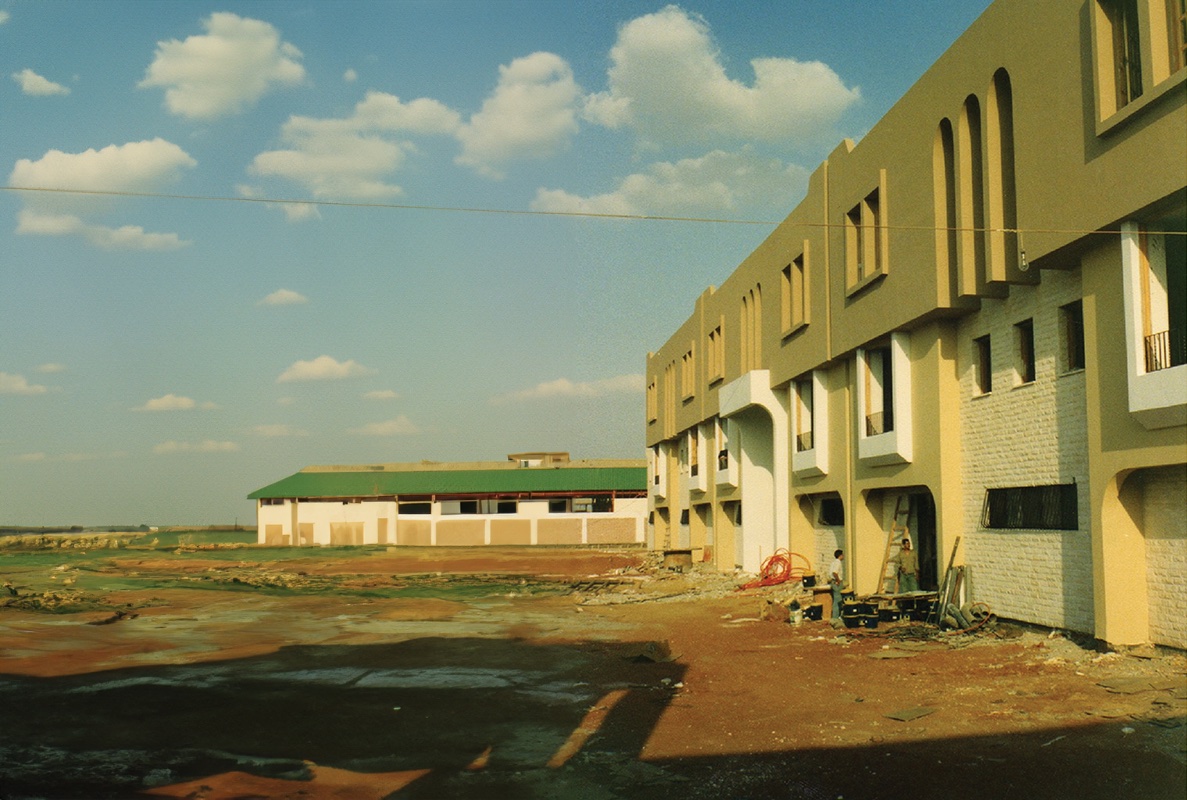
Every material argues for itself. Concrete offers thermal mass that suits Cairo's hot days and cool desert nights, dampening the temperature swings that would otherwise drive cooling costs. Steel offers speed and long spans — indispensable for the industrial halls we have built in 10th of Ramadan City and Qalyub. Glass offers light and transparency, but in Egypt it must be specified with care: orientation, shading, and coating decide whether a facade is an asset or a liability.
Our structural design work follows Egyptian codes alongside American, European, and British standards. That dual fluency matters, because Egypt's seismic zoning, soil conditions — particularly in reclaimed and desert-edge developments — and thermal environment do not always match the assumptions imported codes carry.
In four decades we have learned that the right answer is rarely one material. The Manar Tex Factory pairs a steel frame with concrete cores. Our villas use reinforced concrete skeletons with carefully placed glazing to pull in garden light without importing summer heat. The craft lies in the combination.
When we advise clients at the earliest stage of a project, the structural conversation is inseparable from the architectural one. A building that fights its climate will fight its owners for decades. A building that works with it — with mass where mass helps, and lightness where lightness serves — repays the care for generations.